Category: inShop

  • How inShop Helps Retailers

    How inShop Helps Retailers

    Bring the In-Store Shopping Experience Online

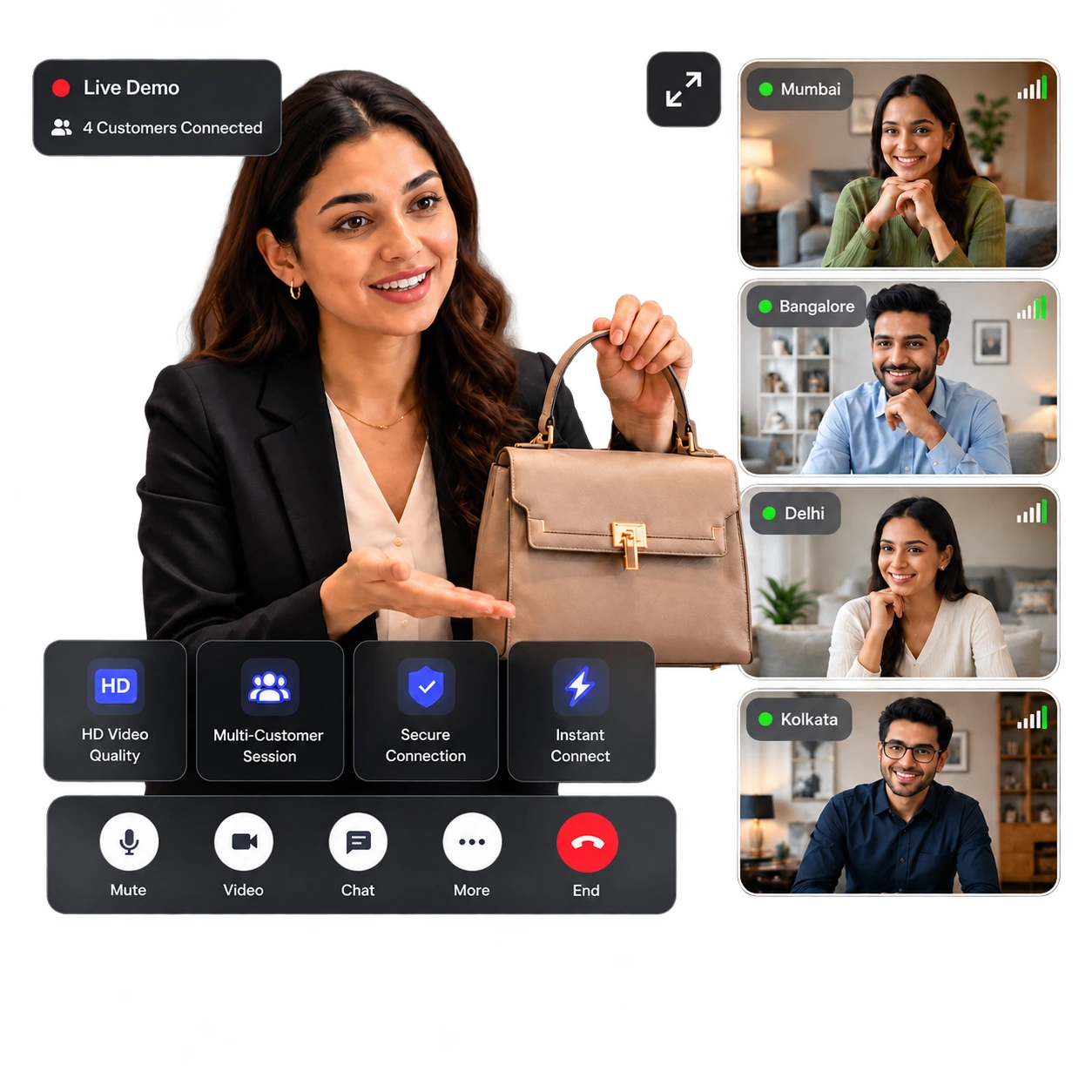
    inShop is a cloud-based virtual shopping platform that connects online shoppers with live store experts through browser-based video call. So retailers can offer in-store service, product demos, and personal advice to customers anywhere.

    A virtual shopping platform brings the human side of in-store shopping to e-commerce. Instead of relying only on product images, descriptions, and chatbots, retailers can connect shoppers with real store experts through live video.

    Table of Contents

    1. What Is a Virtual Shopping Platform?
    2. Why Online Stores Struggle to Match Physical Stores
    3. How inShop Recreates the Store Experience
    4. In-Store vs. Standard Online vs. inShop
    5. Real Results: Retail Case Studies
    6. What Industry Data Says About Video Shopping
    7. Which Retailers Benefit Most
    8. How to Launch Virtual Shopping in 5 Steps
    9. Final Thoughts
    10. Frequently Asked Questions (FAQs)

    What Is a Virtual Shopping Platform?

    A virtual shopping platform is software that lets a shopper talk to a store expert online, in real time, and see products the way they would in a shop. It combines live video, scheduling, and expert help in one place.

    Think of it as a store counter on a screen. A customer starts a call, and a sales associate appears. The associate shows the product, answers questions, and guides the purchase.

    This is different from a website, which only displays products, or a chatbot, which only answers simple questions. Virtual shopping adds a real person and a real conversation.

    inShop is InstaVC’s version of this idea. It is a cloud-based SaaS platform for retail stores and e-commerce businesses that gives online customers a virtual in-store experience through live video calls. For a broader introduction to the category, read our complete guide to virtual shopping platforms.

    Why Online Stores Struggle to Match Physical Stores

    In a physical store, a shopper can ask a question and get an answer in seconds. Online, they get photos, a description, and reviews. That gap shows up in the numbers.

    According to the Baymard Institute, the average online shopping cart abandonment rate is 70.22%, calculated across 50 studies. About 7 in 10 shoppers who add an item to their cart leave without buying. See the full dataset in the Baymard Institute’s cart abandonment research.

    Not every abandoned cart is a lost sale, since many shoppers are just browsing. But Baymard also found that better checkout design alone could raise conversion by 35.26% for the average large online store. Small points of friction cost real sales.

    Common reasons shoppers leave:

    • Unanswered questions about fit, quality, or features
    • Low trust because photos cannot prove quality
    • Choice overload with no one to guide them
    • No human contact to reassure a nervous buyer

    A strong online shopping experience answers these concerns before the shopper gives up.

    How inShop Recreates the Store Experience

    inShop maps each strong in-store moment to an online feature. Here is how.

    1. Instant video calls (the “walk up to the counter” moment)

    Customers can start a call instantly by scanning a QR code or entering a unique Vendor ID. Calls run in the browser through WebRTC technology, so shoppers need no software or app download. inShop is designed to support HD video even on low-bandwidth connections.

    For more on the technology behind reliable calls, see our overview of video conferencing software solutions.

    2. Automatic call routing (the “next available associate” moment)

    Incoming calls go straight to available agents. This keeps wait times short and gets shoppers to an expert fast.

    3. Customer waiting room (the “browse while you wait” moment)

    If every agent is busy, shoppers wait in a branded room. Business admins can upload marketing material there, so the pause becomes a chance to show offers and products.

    4. Scheduled video shopping (the “personal appointment” moment)

    Admins create business schedules based on availability. Registered customers then book scheduled sessions with the business at a time that suits them. This works well for high-value purchases.

    5. Agent and device management (the “store staffing” moment)

    Admins oversee agent activity and performance. Each device gets a unique code, so multiple devices, such as in-store kiosks, can connect to inShop.

    6. Records and feedback (the “learn from every visit” moment)

    inShop keeps call logs (missed, rejected, and incoming calls) and a customer feedback list. Built-in analytics show engagement and shopping behavior to admins, agents, and registered customers.

    7. White labeling and easy integration (the “it’s your store” moment)

    Retailers can embed inShop in their website or mobile app through an SDK or iframe, using their own logo, call button, and look and feel. The platform also offers license management and simple customization, so it fits existing workflows.

    Three portals, one workflow

    inShop runs on three role-based portals:

    • Admin portal: manage devices, agents, waiting room content, schedules, analytics, and licenses.
    • Agent portal: handle incoming calls, scheduled calls, call history, and missed or rejected calls.
    • Customer portal: start meetings, book schedules, and view past meetings.

    The platform uses Node.js as part of its technology stack and is designed to support reliable, scalable video communication.

    Want a store counter on your website?
    See how inShop can put your product experts in front of customers anywhere, with live video, scheduling, and your own branding.
    👉 Contact Us for a Free Demo

    In-Store vs. Standard Online vs. inShop

    Shopping FactorPhysical StoreStandard Online StoreinShop Virtual Shopping
    Expert helpYes, in personLimited (FAQ, chatbot)Yes, live on video
    See product in detailYes, in handPhotos and text onlyYes, live demo on camera
    Wait experienceQueue at the counterNoneBranded waiting room with offers
    Booking a timeWalk-in or phoneNot availableScheduled video sessions
    Trust buildingHighLow to mediumHigh
    ReachLocal onlyGlobalGlobal
    Download neededNot applicableNot applicableNone (browser-based)
    BrandingStore brandStore brandWhite-labeled, store brand
    Customer dataLimitedWeb analyticsCall logs, feedback, analytics

    Real Results: Retail Case Studies

    GRT Jewellers: India’s first video shopping portal

    In 2016, InstaVC implemented India’s first video shopping portal for GRT Jewellers. The company faced a familiar problem: opening stores abroad is expensive and complicated, which limited its global growth.

    InstaVC built a video commerce portal on WebRTC and Node.js and integrated it into the GRT website. Customers worldwide could speak with sales executives in real time, in HD video, on any device and with no downloads.

    The reported results:

    • About 200 calls and appointments scheduled daily
    • New customers in the USA and Australia
    • Higher customer satisfaction and convenience
    • Greater convenience and confidence when purchasing high-value products through virtual product demonstrations and consultations

    Emerald Jewel Industry and CKC Jewelers

    Emerald Jewel Industry, a manufacturer and exporter of fine jewelry, saw a surge in online sales of its diamond collection. Shoppers could inspect the brilliance of each diamond virtually and speak with gemological experts. Emerald also reached new customers across the globe.

    CKC Jewelers, part of the C Krishnaiah Chetty Group with a legacy of over a century, used inShop to enter the online retail space. It reduced inventory management costs by showcasing exclusive items virtually. It also saw a rise in international sales, since customers living abroad could enjoy a real shopping experience through inShop’s consultations.

    The pattern is consistent. Live human interaction builds the trust that high-value online purchases require.

    Ready to see results like these in your store?
    Tell us about your products and customers, and our team will show you how video shopping can work for your business.
    👉 Contact Us to Get Started

    What Industry Data Says About Video Shopping

    Independent research supports the results above.

    Higher conversion. McKinsey reported that companies using live commerce have seen conversion rates approaching 30%, up to ten times the 2–3% typical of conventional e-commerce. Read the full analysis in McKinsey’s report, It’s showtime! How live commerce is transforming the shopping experience.

    A fast-growing channel. The same research estimated China’s live commerce at $171 billion in 2020. It projected that live-commerce-initiated sales could reach 10 to 20 percent of all e-commerce by 2026, if China’s experience is a guide.

    Fewer returns. Coresight Research data, as cited in industry reviews, shows fashion purchases through live commerce return at about 10%, versus 20% to 30% for typical online orders.

    A caveat. These conversion rates usually describe viewers who chose to join a live session, not all site visitors. Your results will depend on your products, your price range, and your associates.

    Video is changing communication beyond retail too. For the bigger picture, read these key facts about video conferencing and how it is transforming communication across industries.

    Key business benefits

    • More sales from shoppers who get their questions answered
    • Global reach without opening physical stores
    • Lower inventory costs by showing exclusive items virtually
    • Greater trust through face-to-face interaction
    • Better insight from analytics, call logs, and feedback

    Which Retailers Benefit Most

    inShop suits businesses where customers want advice before they buy.

    • Retail and jewelry: store owners, gems and jewelry sellers
    • E-commerce: platform owners, marketplace managers, independent online sellers
    • Independent sellers: artisans, craft businesses, and influencers
    • Automotive: dealerships and manufacturers
    • Real estate: property sales and management teams
    • Travel and hospitality: hotels, resorts, and travel agencies
    • Manufacturing and industrial sales: teams that demonstrate complex products

    How to Launch Virtual Shopping in 5 Steps

    Step 1: Pick your products. Start with items shoppers hesitate over, such as high-value or high-choice products.

    Step 2: Choose your experts. Select staff with strong product knowledge. They can work from the office or from home.

    Step 3: Set up the platform. Add your agents, register devices, and create business schedules in the admin portal.

    Step 4: Brand the experience. Embed inShop into your website or app with your logo and call button. Upload offers and product material to the waiting room.

    Step 5: Measure and improve. Review analytics, call logs, and customer feedback. Use what you learn to refine your product pages and your team’s approach.

    Final Thoughts

    The best physical stores succeed because of people, not just products. A virtual shopping platform like inShop brings that human help online. Customers see products clearly, get real answers, and buy with confidence. Retailers reach buyers worldwide without opening new stores.

    The results from GRT Jewellers, Emerald Jewel Industry, and CKC Jewelers show how video shopping works in practice. Start with a few products, train a small team, track results, and grow from there.

    Frequently Asked Questions

    FAQ
    What is a virtual shopping platform?

    A virtual shopping platform is software that connects online shoppers with live store experts through video. Customers see products demonstrated, ask questions, and buy with guidance. It recreates the help a shopper would get in a physical store.

    What is inShop?

    inShop is InstaVC’s cloud-based SaaS virtual shopping platform for retail stores and e-commerce businesses. It offers instant video calls via QR code or Vendor ID, HD video on low bandwidth, automatic call routing, a customer waiting room, scheduled sessions, analytics, and white labeling. Customers join from a web browser with no download.

    How to integrate inShop into my website?

    Retailers embed inShop through an SDK or iframe. They can customize the call button and business logo, so the experience matches their brand. The same platform also works inside a mobile app.

    Why do shoppers abandon online carts?

    According to the Baymard Institute, the average cart abandonment rate is 70.22%. Reasons include browsing without intent to buy, checkout problems, and unanswered questions. Live expert help addresses the questions and trust problems directly.

    Why does video shopping increase trust?

    Shoppers see the real product and speak with a real person. CKC Jewelers found that inShop’s virtual consultations digitally mimicked human presence, building trust and confidence for customers buying from far away.
  • What is a Virtual Shopping Platform? A Complete Guide for Retailers

    What is a Virtual Shopping Platform? A Complete Guide for Retailers

    Virtual shopping is the next big thing in e-commerce. Yet shockingly, for many business owners, it remains a complete mystery. They are still treating their website like a digital catalog. Even after pouring significant money into a standard e-commerce setup, they fail to keep customers hooked.

    What they don’t realize is that the biggest competitive advantage today isn’t a fancier website—it’s using the power of a virtual shopping platform to deliver a one-on-one human-centric experience. It’s the tool that finally closes the gap between a passive online catalog and an active, engaging conversation.

    In this guide, you’ll learn everything you need to know about this powerful tool. We’ll cover the foundational concepts, the technology that powers it, and the specific benefits it can deliver. By the end, you’ll have a clear understanding of what virtual shopping is and how it’s reshaping the future of retail.

    Table of Contents:

    What is Virtual Shopping, Really?

    Today, most people confuse the terms “Virtual shopping” with “live shopping” and “video shopping”. But fundamentally, at its core Virtual shopping is a new way of buying online. It’s integrating the experience of buying anything online with the physical in-store experience into one.

    If you pay attention to most standard product online shopping experiences, you’ll notice that they typically employ a self-service model. Online shopper are on their own to find products, compare options, and make a decision. But Virtual shopping transforms this into a full-service experience. In this new way of shopping, you connect with a product expert online. Then you get the opportunity to ask them any questions you have, request them to show you the product from a different angle, and see the online products in action if you want.

    It’s that simple.

    Think of it this way: traditional e-commerce gives your customers a catalog. Virtual shopping provides an additional layer of interactivity, guiding customers through the catalog in real-time.
    This form of digital shopping is far more engaging.

    The primary goal of such a virtual showrooms is to reintroduce the human element to online retail. It’s about building trust, providing expert guidance, and creating a memorable experience that makes customers feel confident and valued—which, in turn, drives sales and loyalty.

    You’ve probably noticed that more and more businesses are utilling the power of virtual shopping in their ecommerce. It’s not a coincidence. One of the powerful reasons why this shift is happening is that Customers are tired of the impersonal online experience. Think about it. Standard e-commerce is efficient, but it’s also anonymous and cold. Customers are left to guess about size, fit, and quality from static photos. This leads to uncertainty, abandoned carts, and frustratingly high return rates. Virtual shopping is the antidote. It brings back the human conversation that builds trust and helps customers make the right choice the first time.

    What is a Virtual Store, and how does it work?

    With the rise of Virtual shopping, another trend that most retailers are seeing is the rise of the Virtual store. Don’t confuse these with the traditional e-commerce model of the past.

    Think of Virtual Store as a more advanced and improved version of those ecommerce models. It’s the digital environment, powered by a virtual shopping platform, that is integrated directly into your existing website or app. It isn’t a shared space like a virtual shopping mall or a virtual shopping center. It’s the space where your sales associates and online customers meet and interact face-to-face over video.

    Here is a typical scenario of how these virtual stores work:

    1. First, a shopper visits your website and clicks a button labeled “Talk to an Expert.”
    2. Second, a notification is sent to your available sales associates on their device (computer, tablet, or phone).
    3. Then a Live Interaction Begins: The associate and customer are connected via a live video call. The associate can then talk to the customer, understand their needs, and start showing them products live from your store or showroom.
    4. Finally, after the consultation, the customer feels confident and proceeds to purchase the item through your normal online checkout process.

    Simple, right?

    This is the essence of virtual shopping at a virtual store. For customers, this is a valuable experience. It makes their life easier by removing the friction and uncertainty that plague traditional online shopping.

    What is a Virtual Shopping Platform, and Why would you need one?

    You now probably know that in this next era of online retail, you need to think beyond a simple e-commerce website. What you really need is to build a world-class experience that your customer cannot forget.

    And the tool that helps you build that experience is a virtual shopping platform.

    A virtual shopping platform is the underlying software and technology that makes the entire virtual shopping experience possible. Built on modern ecommerce software development, It’s the engine that provides all the tools you and your customers need for live video calls, scheduling, and real-time interaction, all integrated into your website.

    Unlike your e-commerce website (like Shopify or WooCommerce), which is your digital product catalog and checkout system, a virtual shopping platform is a communication tool that plugs into it to add a layer of live, human interaction.

    And that human interaction is exactly how you make your online store feel just as personal and welcoming as your physical one. It’s the tool that finally allows you to bring back the “human element” into the often impersonal world of online retail.

    5 Features of a Good Virtual Shopping Platform

    • Crystal-Clear HD Video: The entire experience hinges on a clear connection. Your platform must provide high-definition video quality, even under low bandwidth conditions, so customers can see the fine details of your products.
    • Hassle-Free, Web-Based Calling: You need to make it incredibly easy for customers to connect with you. The best platforms use WebRTC technology, which allows users to initiate video calls with just one click directly from their web browsers.
    • Seamless Brand Integration: Your customers should feel like they are always on your site. So it should be fully customizable to match your company’s logo, colors, and design.
    • Instant and Scheduled Calls: You need to be there for customers on their terms. A great platform offers the flexibility of both instant video calls for shoppers who need immediate assistance and a simple calendar interface for customers to book virtual appointments at a time that suits them.
    • Actionable Analytics and Reporting: You can’t improve what you can’t measure. The platform should provide easy-to-understand data on customer interactions, call logs, and agent performance.

    Why do Retail Businesses Need a Virtual Shopping Platform?

    There are five specific reasons why you need a virtual shopping platform if you want to succeed in the competitive world of online retail.

    • You will Increase Your Sales and Conversions: Live video consultations allow your experts to answer questions and demonstrate products, giving shoppers the confidence they need to make a buying decision. This personal touch directly leads to more completed purchases and higher revenue for your business.
    • You will Dramatically Reduce Product Returns: A virtual shopping platform helps customers see exactly what they’re getting. This significantly reduces returns because they are choosing the right product the first time.
    • You can Reach a Global Market from a Single Store: A virtual platform shatters geographical barriers and allows you to connect with and sell to customers anywhere in the world.
    • You will Lower Your Operational Costs: By showcasing exclusive or high-value items virtually from a single location, you can eliminate the need to stock those products in every store. This simple change drastically cuts down on your inventory and transportation costs.
    • You will Build Real, Lasting Customer Loyalty: Personalized video interactions make shoppers feel seen and valued, creating a strong connection to your brand. This exceptional experience turns one-time buyers into loyal, repeat customers. Research by McKinsey & Company shows that 71% of consumers expect personalized interactions, and providing them is key to building loyalty.

    What’s the Fastest Way for Your Retail Business to Offer Virtual Shopping?

    So, what is the fastest and easiest way for you to start? Should you hire a team of developers and build your own custom solution from scratch? Or should you use a ready-made platform?

    Let’s be direct. Building your own virtual shopping solution is a massive undertaking. It’s slow, incredibly expensive, and requires a dedicated team of tech experts to build and maintain it. For a retailer whose focus is on products and customers, not code, this path is full of risks and distractions.

    The fastest, easiest, and most cost-effective way to get started is to use an existing virtual shopping platform.

    These platforms are built by experts in video technology. They’ve already solved the complex technical challenges, so you don’t have to. Typically, you can get your virtual store up and running in a matter of a few days or weeks, if you use a virtual shopping platform, as compared to the many months or even years it would take to build one from scratch.

    The great thing about using a virtual shopping platform is that these platforms are also easy to use both for your customers and your sales associates. Most of these platforms use WebRTC technology, which means there is no need to download a separate online shopping application or software for them. Once the service is running, all you need is a device with a camera and a good internet connection. With just a click of a button, you can instantly connect your customers with your sales associate. It’s that simple.

    How inShop is Useful for Retailers

    When you decide to go with a platform, you’ll want one that’s built specifically for the needs of a retailer. While general video tools like Zoom can be used, they lack the specific features, seamless website integration, and retail-focused workflows you need to create a truly professional virtual shopping experience.

    This is where a dedicated platform like inShop makes all the difference.

    inShop is a cloud-based SaaS virtual shopping platform designed from the ground up to help retailers offer an immersive in-store experience to their online customers through live video calls. The biggest difference between building it yourself and using inShop is speed and focus. inShop handles all the complex technology—the secure video streaming, the call routing, the website integration—so you can focus on your business. It’s a ready-made solution that lets you go live quickly without hiring a team of developers.

    Without a platform like this, your business remains limited by geography. inShop gives you the tools to break down those walls and transform your local shop into a global brand.

    Ready to Bridge the Future of Retail with inShop?

    The future of retail belongs to those who can blend the best of digital convenience and human connection. We know that adopting new technology can feel overwhelming. But with inShop, you don’t need to be a tech expert or hire an expensive development team. inShop offers all the benefits of virtual shopping in one easy-to-use package. You can finally start reaching new markets and building a global customer base.

    How to get started with inShop today

    To get started, book a quick 15-minute consultation with the InstaVC team inShop. Our expert will ask you a few simple questions about your business, walk you through all the features inShop offers, and map out the best way to integrate the platform into your website.

    Frequently Asked Questions (FAQs)

    What do you mean by video conferencing?

    Video conferencing involves the integration of audiovisual technology to facilitate two-way communication between people located in diverse areas. Video conferencing technology has gained popularity with the advent of remote meetings using virtual meeting apps, e-learning, telemedicine, and collaborative developments.

    How do I create an online shopping platform?

    Creating a platform from scratch is a complex and expensive process involving a team of developers. The fastest and most cost-effective method is to use a ready-made, cloud-based Virtual Shopping platform like inShop.

    How do I start a virtual shop?

    Starting a virtual shop is simple with the right tools. First, choose a virtual shopping platform that fits your needs. Then, integrate it with your current e-commerce website, train your sales associates on how to use it, and promote the new service to your online customers.

    How do you sell a virtual product?

    Virtual shopping is designed to sell physical products by providing a better online experience. It uses live video consultations to demonstrate the product, answer questions, and build the trust a customer needs to purchase an item they can’t physically touch, which is then shipped to them.

    What kind of online store is most profitable?

    The most profitable online stores are typically those that sell high-value or considered-purchase items where expert advice can significantly influence the sale. This includes industries like fine jewellery, luxury fashion, furniture, and high-end electronics.

    What are the primary challenges in developing a virtual shopping platform?

    Developing a platform from scratch involves significant challenges. This includes maintaining high-quality, low-latency video streaming, building secure payment and data infrastructure, creating a user-friendly interface for both customers and agents.